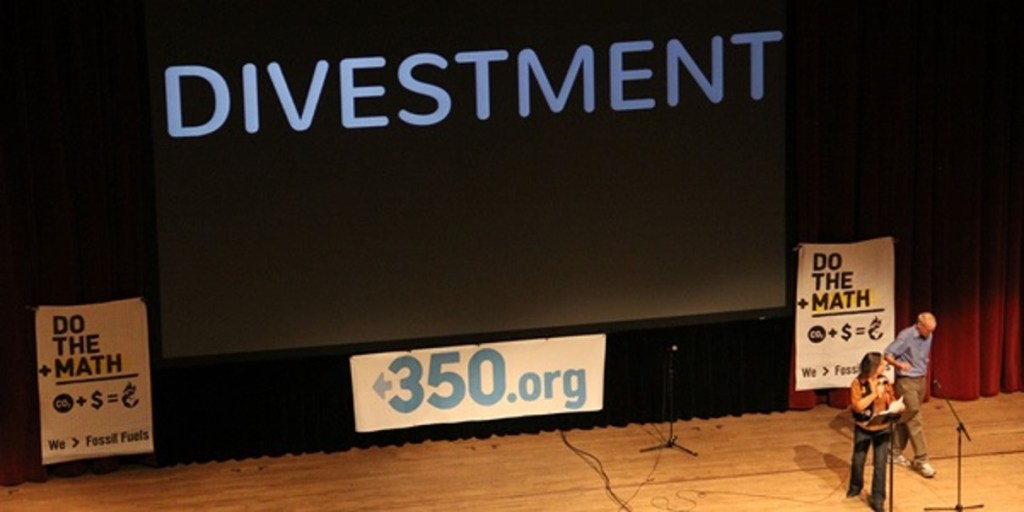
Way back in 2012, just when the fossil fuel divestment movement was getting started, United Methodist and climate leader Bill McKibben popularized a simple mathematical formula that calculates what might make it possible to move away from the threshold of climate chaos.
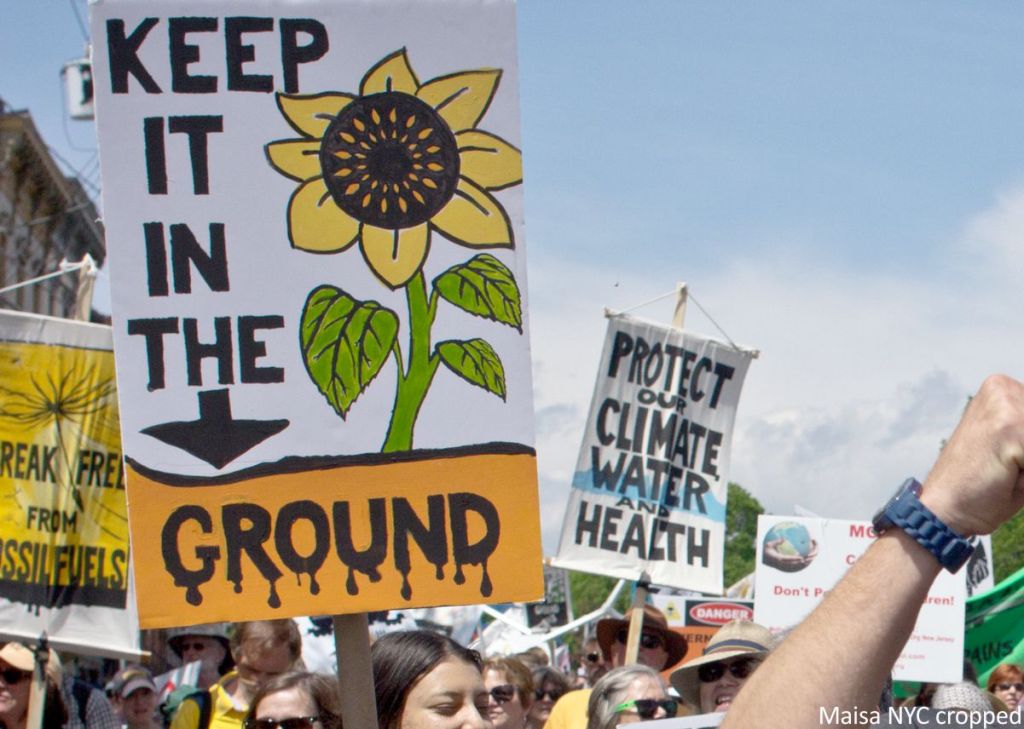
The math comes from economists and scientists, but was given widespread attention when McKibben wrote an article called “Global Warming’s Terrifying New Math.”[i] These calculations became the foundation for the divestment movement, which calls on churches, universities, and other institutions to take a moral stand against climate change by divesting from fossil fuels.
Here’s the math: In 2012, average global temperatures had risen by 1 degree Celsius (1.8 degree Fahrenheit) since the dawn of the Industrial Revolution. (Now it’s 1.1 degree C). At that time, scientists were warning and governments had agreed that warming must be limited to no more than 2 degrees Celsius to prevent runaway climate change.[ii]Now that the planet’s life-support systems have been destabilized much faster than projected, that limit has been lowered to as close to 1.5 degrees of warming as possible.
Oil and gas companies are not meeting Paris climate goals and are only investing at the margins in new energies such as wind and solar.
Carbon Tracker. Source. Report.
They will not lead an energy transition, they will seek instead to maximise their returns … and largely ignore global emissions targets …
Still, the math itself is simple. If we use 2 degrees Celsius as an upper limit, we can set a carbon budget to calculate how much more carbon can be released into the atmosphere before we reach that point. Scientists have determined that number to be 565 gigatons (565 billion tons). Globally, we can burn fossil fuels releasing no more than 565 gigatons of carbon for there to be any likelihood of staying below 2 degrees of warming, and even less to stay close to 1.5.
The problem is that known reserves of coal, oil, and gas amount to five times that much, or 2,795 gigatons. Most of these reserves are held by fossil-fuel corporations, which are planning to extract, sell, and burn them all. In fact, their stock values depend on it. If laws to protect the climate are enacted, many of those reserves will become stranded assets. No wonder fossil-fuel companies fund projects to sow doubt about climate change!
[Fossil fuel reserves that are still below ground are already counted as ‘assets’ by oil, gas and coal companies.] …those reserves are their primary asset, the holding that gives their companies their value. It’s why they’ve worked so hard these past years to figure out how to unlock the oil in Canada’s tar sands, or how to drill miles beneath the sea, or how to frack the Appalachians.
Bill McKibben, Global Warming’s Terrifying New Math
It follows from these calculations that to stay within our carbon budget we must keep most coal, oil, and gas in the ground. Yet fossil-fuel companies continue searching for new reserves and building infrastructure for extreme forms of extraction to access oil from offshore oil drilling, bitumen from tar sands, coal from mountaintop removal, and natural gas from fracking.
The math makes it clear: We cannot give fossil-fuel corporations free rein to mine and burn all their reserves and, by doing so, pollute communities, warm the planet, and cause massive harm. This is the foundation of the moral argument for churches to join other organizations in divesting from fossil fuels: it is morally wrong to invest in corporations whose products and business models cause massive suffering and destroy the ability of the earth to sustain life as we know it.
It is wrong to profit from wrecking the planet.
Fossil Free UMC, 2016
Divestment from fossil fuels may sound radical to those who believe that we should work to reduce greenhouse gas emissions gradually. Anjali Appaduri, an eloquent young climate justice activist, challenged that view when she spoke to gathered world leaders at the 2011 Climate Summit in Durban, South Africa. She said, “Real ambition [on climate change] is dismissed as radical, deemed not politically possible…. Long-term thinking is not radical. What’s radical is to completely alter the planet’s climate, to betray the future of my generation, and to condemn millions to death by climate change.”
[i] Bill McKibben, “Global Warming’s Terrifying New Math,” Rolling Stone Magazine (July 19, 2012), .
This post includes an excerpt from Love in a Time of Climate Change, by Sharon Delgado.
Sharon Delgado is a retired UM Elder, Chair of the Cal-Nevada Climate Justice Ministries Task Force, member of the Coordinating Committee of the UM Creation Justice Movement, and Convener of Fossil Free UMC. She is author of The Cross in the Midst of Creation, Love in a Time of Climate Change, and Shaking the Gates of Hell. She blogs at sharondelgado.org.
 FossilFreeUMC
One response to “Do the Math: Divesting from Fossil Fuels”
Remember McKibben at Riverside Church and his 2013 cover story in Christian Century calling for fossil fuel divestment.
LikeLike